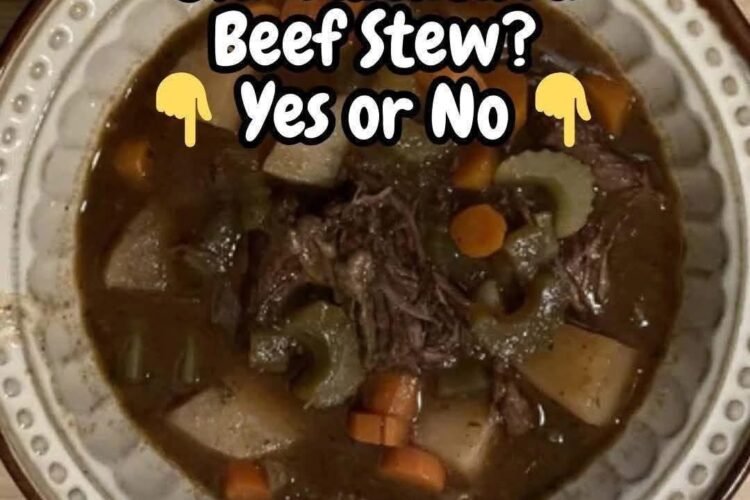
There’s something incredibly comforting about a big pot of old-fashioned beef stew simmering on the stove. Tender chunks of beef, hearty potatoes, sweet carrots, celery, and peas all cook together in a rich, savory broth until everything is wonderfully tender.
This classic beef stew is the kind of meal that makes the whole kitchen smell amazing. It’s hearty enough to serve as a complete dinner, yet simple enough to make with everyday ingredients. The beef is first browned to build deep flavor, then slowly simmered with onions, garlic, herbs, and beef broth before the vegetables are added.
The result is a thick, flavorful stew with fork-tender beef and vegetables that practically melt into the savory gravy.
If you’re looking for a cozy dinner for a cold evening, Sunday supper, or a family meal that everyone can enjoy, this easy beef stew recipe is a classic worth making.
Why You’ll Love This Beef Stew
This recipe has all the qualities you want in a traditional homemade stew:
- Tender, juicy chunks of beef
- A rich and savory broth
- Plenty of hearty vegetables
- Simple pantry-friendly ingredients
- Deep flavor from properly browned beef
- Easy one-pot preparation
- Perfect for leftovers
- Delicious with crusty bread or cornbread
The secret isn’t complicated. Take your time browning the beef, let the stew simmer gently, and add the vegetables at the right time so they don’t become overly soft.
Ingredients You’ll Need
- 2 pounds beef chuck, cut into 1-inch cubes
- 1 teaspoon salt
- ½ teaspoon black pepper
- ¼ cup all-purpose flour
- 3 tablespoons vegetable oil
- 1 large onion, chopped
- 3 cloves garlic, minced
- 4 cups beef broth
- 1 tablespoon tomato paste
- 1 teaspoon Worcestershire sauce
- 1 teaspoon dried thyme
- ½ teaspoon dried rosemary
- 2 bay leaves
- 4 carrots, sliced
- 3 potatoes, peeled and cubed
- 2 stalks celery, sliced
- 1 cup frozen peas
Beef chuck is ideal for this recipe because it contains enough connective tissue and marbling to become incredibly tender during slow cooking.
How to Make Old-Fashioned Beef Stew
Step 1: Season and Coat the Beef
Start by cutting the beef chuck into approximately 1-inch cubes.
Pat the beef dry with paper towels. This small step is worth doing because dry beef browns much better than wet beef.
Season the cubes with salt and black pepper. Place the flour in a large bowl or shallow dish and toss the beef in the flour until each piece is lightly coated.
You don’t need a thick layer of flour. A light coating is enough to help with browning and will also contribute to the rich texture of the stew.
Step 2: Brown the Beef
Heat the vegetable oil in a large heavy-bottomed pot or Dutch oven over medium-high heat.
Once the oil is hot, add the beef in batches. Avoid overcrowding the pot.
Cook the beef, turning the pieces occasionally, until all sides are nicely browned. This should take several minutes per batch.
Don’t worry about cooking the beef all the way through at this point. The goal is to develop a deep brown crust.
Transfer the browned beef to a plate and repeat with the remaining pieces.
Don’t skip this step. The browned bits left on the bottom of the pot are packed with flavor and will become part of the stew’s delicious broth.
Step 3: Cook the Onion and Garlic
Reduce the heat slightly and add the chopped onion to the same pot.
Cook for about 3 to 4 minutes, stirring occasionally, until the onion begins to soften.
Add the minced garlic and cook for another 30 seconds.
Be careful not to burn the garlic. You only need enough time for it to become fragrant.
Step 4: Deglaze the Pot
Pour in a small amount of the beef broth.
Using a wooden spoon or spatula, scrape the bottom of the pot to loosen all those browned bits left behind by the beef.
This process is called deglazing, and it adds tremendous flavor to the finished stew.
Once the bottom of the pot is clean, pour in the remaining beef broth.
Add the tomato paste, Worcestershire sauce, dried thyme, dried rosemary, and bay leaves. Stir everything together.
Step 5: Simmer the Beef
Return the browned beef and any juices collected on the plate to the pot.
Bring the mixture to a gentle boil.
Once it begins bubbling, reduce the heat to low and cover the pot.
Let the stew simmer gently for about 1½ hours, stirring occasionally.
The slow simmer gives the beef time to become tender while allowing the broth to develop a deep, savory flavor.
Avoid keeping the stew at a hard boil. Gentle cooking is what helps create tender beef.
Step 6: Add the Vegetables
After the beef has simmered for 1½ hours, add the sliced carrots, cubed potatoes, and sliced celery.
Stir everything gently so the vegetables are submerged in the broth as much as possible.
Cover the pot again and continue simmering for approximately 45 minutes, or until the vegetables are tender and the beef is fork tender.
The exact cooking time can vary depending on the size of your beef pieces and the particular cut of chuck you’re using.
Step 7: Add the Peas
Once the beef and vegetables are tender, stir in the frozen peas.
Cook for another 5 minutes, just until the peas are heated through.
Frozen peas don’t need much cooking, so adding them near the end helps them retain their color, sweetness, and texture.
Remove the two bay leaves before serving.
Taste the stew and adjust the salt and black pepper if needed.
How to Get the Most Flavor From Your Stew
Don’t Crowd the Beef
If all the beef is added at once, it can release too much moisture and begin steaming instead of browning.
Brown it in batches if necessary. You want plenty of space around the pieces.
Brown the Beef Well
A deep golden-brown crust creates much more flavor than simply adding raw beef to the broth.
Let the beef sit undisturbed for a minute or two before turning it so it has a chance to develop color.
Scrape the Bottom of the Pot
Those dark browned pieces stuck to the bottom aren’t something you want to wash away. They’re concentrated flavor.
Use the broth to loosen them and incorporate them into the stew.
Keep the Heat Low
Once the stew begins simmering, lower the heat.
A slow, gentle simmer allows the connective tissue in the beef chuck to gradually break down, producing tender meat.
Common Mistakes to Avoid
Using lean beef: Very lean cuts can become dry and tough during long cooking. Beef chuck is a better choice for stew.
Skipping the browning: You can technically cook the beef without browning, but the finished stew won’t have the same depth of flavor.
Overcrowding the pot: Brown the beef in batches when necessary.
Boiling too aggressively: A hard boil can make the beef tougher rather than tender.
Adding vegetables too early: Potatoes and carrots can become mushy if cooked for the entire duration. Adding them later gives you tender vegetables that still hold their shape.
Forgetting the bay leaves: Remember to remove them before serving.
Easy Beef Stew Variations
This recipe is easy to customize depending on what you have in the kitchen.
For extra vegetables, add sliced mushrooms, green beans, or additional celery.
You can also replace some of the potatoes with sweet potatoes for a slightly sweeter flavor.
If you prefer a thicker stew, allow it to simmer uncovered for the last 10 to 15 minutes. This lets some of the liquid evaporate and concentrates the broth.
For extra richness, stir in a small pat of butter at the end.
You can also add a little more Worcestershire sauce if you enjoy a deeper savory flavor.
What to Serve With Beef Stew
This stew is filling enough to serve by itself, but a few simple sides make it even better.
Serve it with:
- Crusty French bread
- Homemade dinner rolls
- Cornbread
- Garlic bread
- Simple green salad
- Steamed vegetables
Bread is especially useful because it gives you something to soak up all that rich broth.
How to Store Leftover Beef Stew
Allow leftover stew to cool slightly before transferring it to airtight containers.
Store it in the refrigerator and enjoy within a few days.
The flavors often become even better after resting overnight, making this a fantastic make-ahead meal.
For longer storage, beef stew can also be frozen in freezer-safe containers. Leave a little room at the top because the liquid expands as it freezes.
Thaw frozen stew in the refrigerator before reheating.
To reheat, warm it gently on the stovetop over medium-low heat, stirring occasionally. You can add a splash of beef broth or water if the stew has thickened too much.
Frequently Asked Questions
What is the best beef for beef stew?
Beef chuck is one of the best choices because it has enough fat and connective tissue to become tender and flavorful during slow cooking.
Why is my stew meat tough?
Usually, tough stew meat simply needs more cooking time. Beef chuck becomes tender as its connective tissue gradually breaks down. Keep the stew at a gentle simmer and give it more time if needed.
Can I make beef stew ahead of time?
Absolutely. Beef stew is an excellent make-ahead dinner. Prepare it a day in advance, refrigerate it, and gently reheat it before serving.
Can I freeze beef stew?
Yes. Let the stew cool, place it in freezer-safe containers, and freeze it. Thaw it in the refrigerator before reheating.
How can I make the stew thicker?
You can simmer it uncovered for several minutes to reduce the liquid. The flour used to coat the beef will also help naturally thicken the broth.
Can I use different vegetables?
Yes. Mushrooms, green beans, peas, parsnips, and sweet potatoes can all work well in a traditional beef stew.
Final Thoughts
This old-fashioned beef stew recipe is the kind of meal that never needs fancy ingredients to feel special. Tender beef, potatoes, carrots, celery, peas, and aromatic herbs come together in one pot to create a warm and satisfying dinner.
The most important steps are simple: brown the beef properly, build flavor from the browned bits, simmer the meat slowly, and add the vegetables at the right time.
Serve it with warm crusty bread or homemade cornbread, and you’ve got the perfect comforting meal for a cozy night at home. It’s hearty, flavorful, filling, and exactly the kind of classic recipe you’ll want to make again and again.