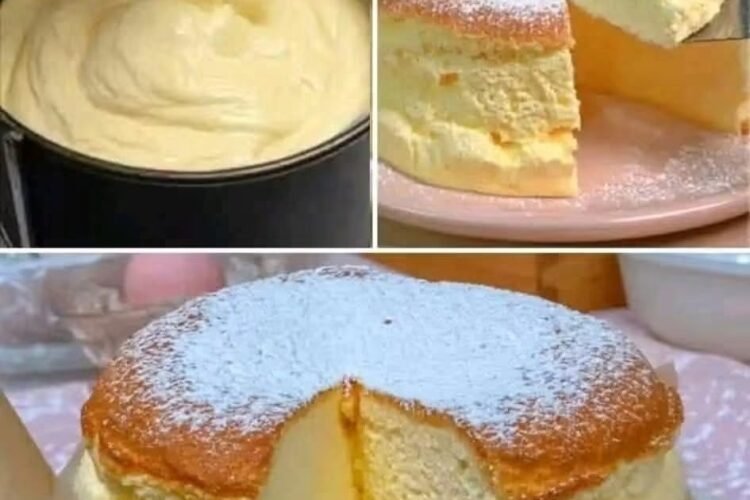
If you love cheesecake but sometimes find traditional versions too rich or heavy, Japanese Cotton Cheesecake is a dessert you absolutely need to try. Light, fluffy, gently sweet, and wonderfully soft, this Japanese-style cheesecake has a texture that falls somewhere between a classic cheesecake and a delicate soufflé.
The first thing you’ll notice is the gentle wobble. When the cake comes out of the oven, the center should move slightly when the pan is nudged. Once chilled, that delicate structure transforms into an incredibly soft, creamy, almost cloud-like cheesecake that practically melts in your mouth.
Unlike a dense American cheesecake, Japanese Cotton Cheesecake gets much of its lift from whipped egg whites. The meringue is carefully folded into a smooth cream cheese batter, creating tiny pockets of air throughout the cake. A water bath then helps the cheesecake bake gently and evenly, keeping the inside moist while reducing the risk of cracks.
Although the recipe requires a little more attention than an ordinary cake, there’s nothing mysterious about the process. The most important things are using a clean bowl for your egg whites, whipping the meringue to the right consistency, folding gently, and allowing the finished cheesecake to cool gradually.
Serve it chilled with a light dusting of powdered sugar, fresh berries, or simply enjoy it plain. Its delicate flavor and beautiful texture make it perfect for afternoon tea, birthdays, holidays, dinner parties, or whenever you want a dessert that feels a little special.
Why You’ll Love This Japanese Cheesecake
There’s plenty to appreciate about this Japanese Cotton Cheesecake:
- Light and airy texture: It’s much softer and less dense than traditional cheesecake.
- Beautiful presentation: The golden top and characteristic gentle jiggle make it instantly appealing.
- Mild sweetness: The flavor is rich but not overwhelmingly sweet.
- Perfect for special occasions: It looks elegant without requiring elaborate decoration.
- Make-ahead friendly: Chilling overnight gives the cheesecake plenty of time to develop its ideal texture.
- Easy to customize: Matcha, citrus, chocolate, and fresh berries can all add something different.
Ingredients You’ll Need
Cream Cheese
Use 200g (7 ounces) cream cheese, softened to room temperature. Softening it first makes it much easier to create a completely smooth batter.
Butter and Milk
You’ll need 60g unsalted butter and 100ml whole milk. These ingredients are gently combined with the cream cheese to create the rich but fluid base of the cheesecake.
Eggs
Six large eggs are separated into yolks and whites. The yolks enrich the cream cheese mixture, while the whites are whipped into a meringue that provides the cake’s airy structure.
Flour and Cornstarch
Use 60g all-purpose flour and 20g cornstarch, both sifted. Cornstarch helps keep the cake tender and contributes to its delicate texture.
Sugar
Use 120g granulated sugar, gradually added to the egg whites while whipping.
Vanilla and Salt
One teaspoon of vanilla extract adds warmth, while 1/4 teaspoon salt balances the sweetness.
Lemon Juice
One tablespoon of lemon juice is optional. It can help support a stable meringue while adding a subtle brightness.
Powdered Sugar
A light dusting of powdered sugar is optional but makes the finished cheesecake look beautiful.
How to Make Japanese Cotton Cheesecake
1. Prepare the Pan and Oven
Preheat your oven to 325°F (160°C).
Grease an 8-inch round cake pan and line both the bottom and sides with parchment paper. Allow the parchment on the sides to extend slightly above the rim.
Because this cheesecake is baked in a water bath, wrap the outside of the pan with two layers of aluminum foil. Make sure the foil is secure and has no obvious gaps where water could enter.
Place a larger roasting pan in the oven and add approximately 1 inch of hot water.
2. Create the Cream Cheese Base
Place the softened cream cheese, butter, and milk in a heatproof bowl.
Set the bowl over a saucepan containing gently simmering water, creating a bain-marie.
Stir the mixture continuously until the cream cheese and butter have melted and everything becomes smooth and creamy.
Remove the bowl from the heat and allow the mixture to cool slightly.
3. Add the Egg Yolks
Separate the six eggs carefully.
Add the egg yolks to the cream cheese mixture one at a time, whisking well after each addition.
Once all the yolks are incorporated, add the vanilla extract.
The mixture should be smooth and creamy without visible streaks of egg yolk.
4. Add the Dry Ingredients
Sift the flour and cornstarch together.
Add them to the cream cheese mixture along with the salt.
Whisk gently until the batter becomes smooth.
Avoid excessive mixing. Once the flour has been incorporated, stop. Overworking the batter can make the cheesecake less tender.
5. Whip the Egg Whites
Place the egg whites in a large, completely clean mixing bowl.
Using an electric mixer, beat them on medium speed until they become foamy.
If using lemon juice, add it at this point.
Gradually add the sugar in about three additions while continuing to beat the whites.
Increase the mixer speed and continue until the meringue becomes glossy and reaches soft peaks.
When you lift the whisk, the peak should stand briefly before gently curling over.
This stage is extremely important. Stiff, dry egg whites can be difficult to incorporate and may cause the batter to lose too much air during folding.
6. Fold the Meringue Into the Batter
Add approximately one-third of the meringue to the cream cheese mixture.
Use a rubber spatula to gently fold it through the batter. This first addition lightens the cream cheese mixture.
Add the remaining meringue and continue folding gently.
Use broad movements, bringing the spatula from the bottom of the bowl upward while turning the bowl.
Stop as soon as there are no obvious streaks of meringue.
The goal is to combine everything while preserving as much air as possible.
7. Fill the Cake Pan
Pour the finished batter into the prepared pan.
Gently tap the pan against the counter a few times to release large air pockets.
Avoid excessive tapping because you don’t want to knock out the air you carefully incorporated into the batter.
8. Bake in a Water Bath
Carefully place the cake pan into the larger roasting pan containing the hot water.
The water should reach approximately halfway up the outside of the cake pan.
Bake at 325°F (160°C) for 15 minutes.
Then reduce the oven temperature to 285°F (140°C) and continue baking for approximately 60 to 70 minutes.
The cheesecake should develop a golden-brown top while the center remains slightly jiggly when gently shaken.
9. Cool the Cheesecake Gradually
When the cheesecake is finished, turn off the oven.
Leave the cheesecake inside with the oven door slightly ajar for approximately 30 to 60 minutes.
This gradual cooling process is one of the most important parts of the recipe. A sudden change from the hot oven to a cool kitchen can cause the delicate cake to contract quickly, increasing the chance of cracks or dramatic sinking.
10. Cool and Chill
Remove the cheesecake from the water bath and allow it to cool completely on a wire rack.
Once completely cooled, carefully remove it from the pan.
Refrigerate for at least 4 hours, although overnight chilling is even better.
The cheesecake will become firmer and develop its characteristic cotton-soft texture as it chills.
11. Serve
Just before serving, dust the top lightly with powdered sugar if desired.
Slice gently using a sharp knife.
Serve the cheesecake chilled or allow individual slices to sit at room temperature for about 15 minutes if you prefer a slightly softer texture.
Tips for Perfect Japanese Cotton Cheesecake
Use Room-Temperature Ingredients
Soft cream cheese blends much more easily than cold cream cheese. Allowing the cream cheese and eggs to come closer to room temperature can help create a smoother batter.
Keep the Egg White Bowl Completely Clean
Even a small amount of grease or egg yolk can interfere with whipping egg whites.
Use a clean, dry bowl and carefully separate your eggs.
Don’t Overwhip the Meringue
The goal is soft, glossy peaks—not stiff, dry peaks.
A softer meringue is easier to fold into the cream cheese batter and helps produce the delicate texture this cheesecake is known for.
Fold Carefully
The air trapped inside the meringue is what helps the cheesecake rise.
Use a gentle folding motion instead of stirring aggressively.
Don’t Skip the Water Bath
The water bath provides gentle, moist heat around the cake. It helps the cheesecake bake more evenly and reduces the chance of a dry interior or cracked surface.
Cool Slowly
Resist the temptation to immediately remove the cheesecake from a hot oven.
Gradual cooling gives the delicate structure time to adjust to the changing temperature.
Delicious Variations
Matcha Cotton Cheesecake
For a Japanese-inspired twist, sift 1 to 2 tablespoons of matcha powder with the flour and cornstarch. The earthy green tea flavor pairs beautifully with the creamy cheesecake.
Citrus Cheesecake
Add finely grated lemon or orange zest to the cream cheese mixture. Citrus gives the cheesecake a fresh, bright flavor.
Chocolate Version
For a chocolate variation, melt approximately 50g dark chocolate into the cream cheese mixture. Depending on the sweetness of the chocolate, you can slightly reduce the sugar.
Berry Topping
Serve chilled slices with fresh strawberries, raspberries, blueberries, or a simple berry compote.
Caramel Cheesecake
A small drizzle of caramel sauce over each slice adds extra richness and creates a beautiful contrast with the light cheesecake.
How to Store Japanese Cotton Cheesecake
Keep leftover cheesecake refrigerated in an airtight container or tightly covered with plastic wrap.
It should keep well in the refrigerator for approximately 3 to 4 days.
For the best texture, serve it chilled or allow it to sit at room temperature briefly before eating.
Freezing is possible, but the texture may change slightly after thawing. If you need to freeze it, wrap individual slices tightly in plastic wrap and then place them in a freezer-safe container or bag.
Freeze for up to about 1 month and thaw overnight in the refrigerator.
There’s no need to reheat Japanese Cotton Cheesecake. Heating can alter its delicate, airy texture.
Frequently Asked Questions
Why did my Japanese Cotton Cheesecake crack?
Cracking can result from overbaking, excessive oven temperature, sudden temperature changes, or an unstable meringue.
Make sure the cheesecake is baked in a water bath, avoid overwhipping the egg whites, and allow the cake to cool gradually inside the oven.
Can I bake this cheesecake without a water bath?
Technically, yes, but a water bath is strongly recommended.
Japanese Cotton Cheesecake benefits from the gentle, humid heat provided by a bain-marie. Without it, the cheesecake may bake unevenly, become drier, or crack more easily.
How do I know when it’s done?
The top should be golden brown and the edges should look set.
The center should still have a gentle wobble when you carefully shake the pan. It shouldn’t look liquid, but it shouldn’t be completely firm either.
If using a thermometer, an internal temperature around 167°F (75°C) can be used as an additional guide.
Why did my cheesecake sink?
A small amount of settling is normal with Japanese Cotton Cheesecake.
However, dramatic sinking can happen when the meringue is underwhipped, overwhipped, or deflated during folding. Opening the oven door too frequently or baking at an unsuitable temperature can also contribute.
Focus on achieving glossy soft peaks and fold gently.
Can I make this cheesecake ahead of time?
Absolutely. In fact, this cheesecake is an excellent make-ahead dessert.
Prepare it the day before serving and let it chill overnight. This gives the cake plenty of time to fully set and makes it easier to slice neatly.
Final Thoughts
Japanese Cotton Cheesecake is one of those desserts that feels almost magical. It starts with familiar ingredients—cream cheese, eggs, butter, milk, flour, and sugar—but careful technique transforms them into something remarkably light and delicate.
The whipped egg whites create the airy structure, while the water bath keeps the cheesecake moist and evenly baked. The slow cooling process then helps protect that beautiful texture.
Once you master the basics, you can experiment with matcha, citrus, chocolate, berries, or other toppings to make the recipe your own.
Whether you’re serving it at afternoon tea, bringing dessert to a family gathering, or simply want to try something different from traditional cheesecake, this soft and jiggly Japanese dessert is sure to make an impression.
Recipe Details
Prep Time: 25 minutes
Bake Time: 75–85 minutes
Chill Time: At least 4 hours
Total Time: About 5 hours 40 minutes
Servings: 8
Calories: Approximately 280 per serving
Approximate Nutrition Per Serving
- Calories: 280 kcal
- Protein: 8g
- Carbohydrates: 25g
- Fat: 17g
- Fiber: 0.5g
- Sodium: 150mg
Nutrition information is an estimate and may vary depending on the specific ingredients and brands used.