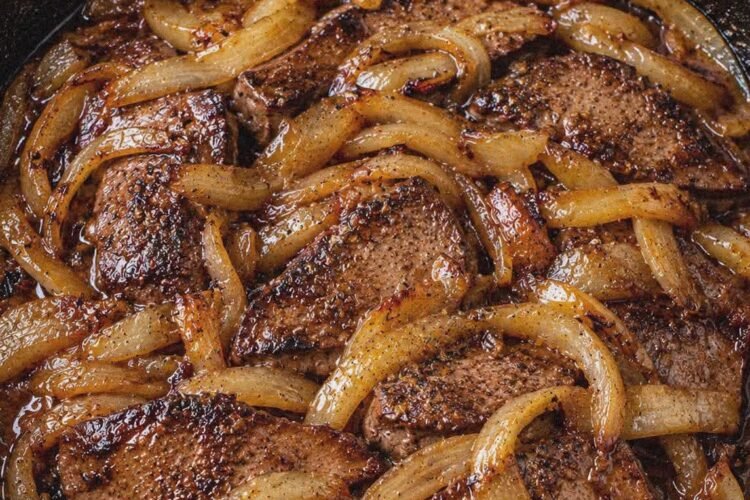
If you’re looking for an old-fashioned comfort food dinner that is hearty, flavorful, and surprisingly simple to prepare, Beef Liver and Onions deserves a place on the table. Tender slices of beef liver are lightly coated in seasoned flour, quickly pan-fried in butter, and paired with sweet, golden onions. Everything is finished with a savory pan sauce made from beef stock and a splash of dry white wine.
This classic combination has been enjoyed for generations because it transforms a few humble ingredients into a deeply satisfying meal. The onions bring sweetness to balance the rich flavor of the liver, while the butter creates beautifully browned edges. A little fresh sage adds an earthy note, and parsley gives the finished dish a fresh pop of flavor.
The key to great liver and onions is simple: don’t overcook the liver. When cooked properly, it should be tender and moist rather than dry or tough. Once you master that part, this old-fashioned skillet dinner becomes an easy weeknight favorite.
Why You’ll Love This Recipe
There are several reasons this classic dish continues to be popular.
- Quick and affordable: Most of the cooking happens in one skillet.
- Rich and satisfying: Butter, onions, beef stock, and herbs create plenty of flavor.
- Simple ingredients: You don’t need a long list of specialty ingredients.
- Classic comfort food: It has that nostalgic, homemade-dinner feeling.
- Easy to customize: You can adjust the herbs, sauce, and level of browning to suit your taste.
Ingredients You’ll Need
For about 4 servings:
- 1 pound beef liver
- ¼ cup all-purpose flour
- ½ teaspoon salt
- ⅛ teaspoon black pepper
- ¼ to ½ cup butter, divided
- 1 to 2 tablespoons cooking oil
- 2 cups thinly sliced onions
- 1 to 2 tablespoons fresh sage, finely minced
- ½ cup beef stock
- ¼ cup dry white wine
- 1 tablespoon fresh Italian parsley, minced
You can adjust the amount of butter depending on how rich you want the dish. A combination of butter and a little neutral cooking oil helps prevent the butter from browning too quickly while adding plenty of flavor.
Choosing and Preparing Beef Liver
Fresh beef liver should have a deep reddish-brown color and a clean appearance. Before cooking, trim away any tough connective tissue or membranes you notice.
Slice the liver into pieces approximately ½ inch thick. Keeping the pieces relatively uniform helps them cook at the same rate.
If you’re especially sensitive to the strong flavor of liver, you can soak the slices in milk for 20 to 30 minutes before cooking. Drain and pat them very dry before continuing with the recipe. This isn’t essential, but it can give the finished dish a milder flavor.
How to Make Beef Liver and Onions
1. Prepare the Seasoned Flour
Place the flour, salt, and black pepper in a large resealable bag or shallow bowl.
Shake or stir the ingredients together until evenly combined.
Add the sliced beef liver and gently toss until every piece has a light coating of seasoned flour. Shake off any excess flour.
The thin flour coating helps the liver develop a golden exterior while also giving the pan sauce something to cling to later.
2. Slowly Cook the Onions
Heat a large skillet over medium-high heat.
Add about 3 tablespoons of butter along with a small amount of oil. Once the butter has melted, add the sliced onions.
Cook the onions, stirring regularly, until they become soft, glossy, and lightly golden. This usually takes around 8 to 12 minutes, depending on how thinly you’ve sliced them.
Don’t rush this step. The onions are an important part of the dish because their natural sweetness balances the rich flavor of the liver.
Once the onions are tender and lightly browned, transfer them to a plate or bowl. Season them lightly with salt and pepper and set aside.
3. Cook the Beef Liver
Return the skillet to the heat and add about 4 tablespoons of butter with another small drizzle of oil.
Once the butter is melted and the pan is hot, carefully place the floured liver pieces into the skillet in a single layer.
Avoid overcrowding the pan. If necessary, cook the liver in batches.
Cook the liver for approximately 2 to 3 minutes per side, depending on the thickness of the slices. The outside should become nicely browned while the center remains tender.
The original cooking time can vary considerably based on the size and thickness of the liver, so use appearance and texture rather than relying only on the clock.
One of the biggest mistakes with liver is cooking it too long. Overcooking can make it dry, chewy, and noticeably stronger in flavor.
4. Bring the Liver and Onions Together
Once the liver is browned, return the cooked onions to the skillet.
Sprinkle in the minced fresh sage and gently toss everything together.
Allow the liver and onions to warm together for another minute or two. The sage will become fragrant and coat the ingredients with its earthy flavor.
At this stage, avoid prolonged cooking. The goal is simply to bring everything together before making the sauce.
5. Make the Rich Pan Sauce
Transfer the liver and onions to a serving platter and loosely cover them to keep them warm.
Don’t clean the skillet. Those browned bits left on the bottom are where much of the flavor comes from.
Pour the beef stock and dry white wine into the hot skillet.
Using a wooden spoon or spatula, scrape the bottom of the pan to loosen the browned bits. This process is called deglazing, and it creates a flavorful base for the sauce.
Allow the liquid to simmer for several minutes. As it reduces, it will become more concentrated and slightly thicker.
Taste the sauce and adjust the seasoning if needed.
For an even richer finish, swirl in a small piece of cold butter once the skillet is removed from the heat.
6. Assemble and Serve
Arrange the warm liver and onions on a serving platter or individual plates.
Spoon the reduced pan sauce generously over the top.
Finish with freshly chopped Italian parsley for a bright, fresh contrast.
Serve immediately while everything is hot.
Tips for Tender Beef Liver
Don’t overcook it. This is the most important rule. Liver cooks quickly, and excessive heat can make it tough.
Slice evenly. Pieces of similar thickness will cook more consistently.
Dry the liver before flouring. Excess moisture can interfere with browning.
Don’t overcrowd the skillet. Crowding causes steaming instead of proper browning.
Give the onions time. Properly softened onions provide sweetness that balances the rich liver.
Use a hot skillet. Starting with a properly heated pan helps create a golden crust quickly.
Deglaze the pan. Those browned bits left behind after cooking are packed with flavor and make the sauce much better.
Easy Variations
Creamy Liver and Onions
For a creamy version, reduce the beef stock and wine as directed, then stir in a small amount of heavy cream. Simmer gently until the sauce thickens.
Mushroom Liver and Onions
Add sliced mushrooms to the skillet after the onions have softened. Cook until browned, then continue with the liver and sauce.
Bacon Liver and Onions
Cook a few strips of bacon in the skillet first. Remove the bacon, crumble it, and use some of the rendered fat along with butter to cook the onions and liver.
Herb Butter Version
For a more herb-forward flavor, add fresh thyme or rosemary along with the sage.
What to Serve With Liver and Onions
This dish pairs especially well with creamy mashed potatoes. The potatoes are perfect for soaking up the savory pan sauce.
For a lighter plate, serve it with steamed green beans, roasted carrots, or a crisp green salad.
You can also serve it with crusty bread to make sure none of that delicious sauce is left behind.
For a traditional comfort-food meal, try combining the liver and onions with mashed potatoes and a simple green vegetable.
Storage and Reheating
Store leftover beef liver and onions in an airtight container in the refrigerator for up to 2 days.
Because liver can become tougher when repeatedly reheated, warm leftovers gently in a skillet over low to medium heat. Add a splash of beef stock or water to the pan if the sauce has thickened too much.
Avoid prolonged reheating, as this can make the liver dry.
Frequently Asked Questions
Why does beef liver sometimes taste bitter?
Liver naturally has a strong, mineral-rich flavor. Soaking it briefly in milk can help make the flavor milder. Properly caramelized onions also provide sweetness that balances the richness.
Should I soak beef liver before cooking?
You don’t have to, but soaking it in milk for 20 to 30 minutes can be helpful if you prefer a milder flavor. Always drain and pat the liver dry before seasoning and flouring.
How do I keep liver from becoming tough?
The main trick is avoiding overcooking. Liver cooks much faster than many other cuts of beef, so watch it closely and remove it from the heat as soon as it’s properly cooked.
Can I use frozen liver?
Yes. Thaw it safely in the refrigerator before cooking. Pat it thoroughly dry before coating it with flour.
Can I leave out the wine?
Absolutely. Replace the wine with additional beef stock if you prefer not to use wine. The sauce will still be flavorful.
What type of onion works best?
Yellow onions are an excellent all-purpose choice, but white or sweet onions can also be used. Sweet onions will give the dish a noticeably sweeter flavor.
Final Thoughts
Classic Beef Liver and Onions is proof that inexpensive ingredients can create a memorable homemade meal. Tender pan-seared liver, sweet golden onions, fresh sage, and a rich beef-stock pan sauce come together in one skillet for a comforting dinner with plenty of old-fashioned character.
The secret is in the technique: cook the onions until they’re beautifully tender, give the liver a light seasoned coating, brown it quickly, and don’t let it spend too much time over the heat.
Serve it with mashed potatoes, vegetables, or warm crusty bread, and spoon plenty of that savory pan sauce over everything. Once you get the cooking time right, this classic recipe can become a simple, satisfying addition to your dinner rotation.