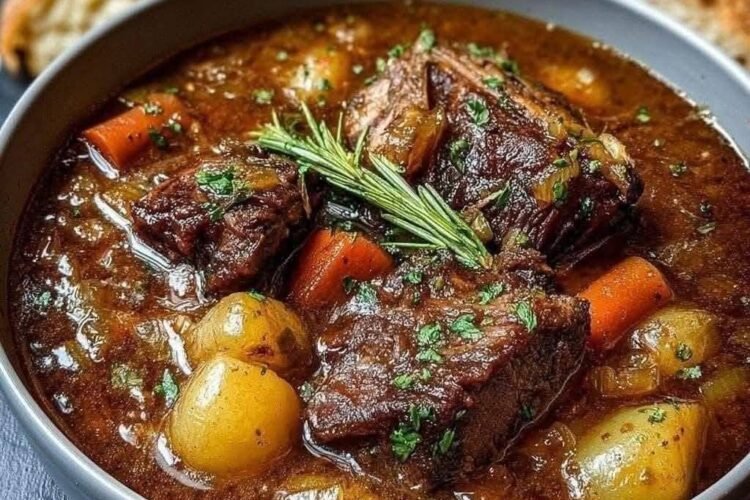
When the weather turns chilly and you’re craving something warm and satisfying, few meals hit the spot like a big pot of beef short rib stew. Slow-cooked until the meat is incredibly tender, this hearty stew is packed with carrots, potatoes, celery, onions, and plenty of rich beefy flavor.
The secret to making this stew so delicious is taking your time. First, the short ribs are browned until deeply caramelized, creating a flavorful foundation for the entire dish. Then the vegetables, tomato paste, herbs, and beef broth come together while the ribs slowly simmer until the meat practically falls from the bones.
This is the kind of dinner that fills the kitchen with an amazing aroma and makes everyone eager to sit down at the table.
Serve it with crusty bread for soaking up the rich broth, and you’ve got a comforting homemade meal that’s perfect for Sunday dinner, cold evenings, family gatherings, or whenever you want something extra hearty.
Why You’ll Love This Beef Short Rib Stew
There are plenty of reasons this recipe deserves a spot in your dinner rotation:
- Deep, rich flavor from beautifully seared beef short ribs
- Tender, slow-cooked meat that practically falls off the bone
- Plenty of vegetables for a complete one-pot meal
- Simple ingredients that create an impressive result
- Perfect for make-ahead meals because the flavor gets even better as it rests
- Easy to customize with your favorite vegetables and seasonings
- Perfect with crusty bread for soaking up every drop of the flavorful broth
Ingredients You’ll Need
For the Beef
- 3 pounds bone-in beef short ribs
- 2 tablespoons olive oil
- 1 teaspoon salt, or to taste
- 1/2 teaspoon black pepper
Bone-in short ribs are ideal because the bones add wonderful depth and richness to the cooking liquid.
For the Vegetables
- 1 large onion, chopped
- 3 garlic cloves, minced
- 3 large carrots, cut into chunky pieces
- 3 large potatoes, peeled and cubed
- 2 celery stalks, sliced
- 1 cup peas, optional
Cut the vegetables into relatively large pieces so they hold their shape during the long cooking process.
For the Stew
- 2 tablespoons tomato paste
- 1 teaspoon paprika
- 1 cup red wine, optional
- 4 cups beef broth
- 1 tablespoon Worcestershire sauce, optional
- 2 bay leaves
- 2 sprigs fresh rosemary, or 1 teaspoon dried
- 3 sprigs fresh thyme, or 1 teaspoon dried
You’ll also want fresh chopped parsley for garnish.
How to Make Beef Short Rib Stew
Step 1: Prepare and Season the Short Ribs
Before cooking, pat the beef short ribs dry with paper towels. Removing excess moisture helps the meat develop a much better brown crust when it hits the hot pot.
Season the ribs generously with salt and black pepper on all sides.
Heat the olive oil in a large Dutch oven or heavy-bottomed pot over medium-high heat. Once the oil is hot, carefully place the short ribs into the pot.
Sear the ribs in batches if necessary. Avoid overcrowding the pot because too much meat at once can cause the beef to steam instead of brown.
Brown the ribs on all sides until they develop a deep golden-brown crust. This usually takes several minutes per side.
Once browned, transfer the short ribs to a plate and set them aside.
Step 2: Sauté the Vegetables
Keep the same Dutch oven on the stove. The browned bits left on the bottom of the pot contain a tremendous amount of flavor.
Add the chopped onion, carrots, and celery. Cook for about 5–6 minutes, stirring occasionally, until the vegetables begin to soften.
Add the minced garlic and cook for another minute, just until fragrant.
Be careful not to burn the garlic. It only needs a short amount of time to release its flavor.
Step 3: Build the Flavor Base
Add the tomato paste and paprika to the vegetables.
Stir everything together and cook for about a minute. Cooking the tomato paste briefly helps deepen its flavor and gives the stew a richer color.
If you’re using red wine, pour it into the pot now.
Use a wooden spoon to scrape the bottom of the Dutch oven, loosening all those flavorful browned bits left behind from the beef.
Allow the wine to simmer until it has reduced by roughly half.
If you prefer not to use wine, simply replace it with additional beef broth.
Step 4: Add the Beef and Broth
Return the seared short ribs to the Dutch oven.
Pour in the beef broth, then add the Worcestershire sauce if using. Add the bay leaves, rosemary, and thyme.
The liquid should come partway up the sides of the ribs. You don’t necessarily need to completely submerge them.
Bring the mixture to a gentle simmer.
Once simmering, reduce the heat to low and cover the pot.
Step 5: Slow-Cook Until Tender
Allow the stew to simmer gently for approximately 2 1/2 to 3 hours.
This slow cooking time is what transforms the tough short ribs into incredibly tender meat.
Check the pot occasionally and make sure the liquid is maintaining a gentle simmer rather than a vigorous boil.
The beef is ready when it is extremely tender and easily pulls away from the bone with a fork.
Step 6: Add the Potatoes
Add the peeled and cubed potatoes approximately 45 minutes before the stew is finished.
Stir them gently into the broth, then cover the pot again and continue cooking.
Adding the potatoes later prevents them from becoming overly soft and falling apart during the long cooking time.
Cook until the potatoes are fork-tender.
Step 7: Add the Peas
During the final 5 minutes of cooking, stir in the peas if you’re using them.
Frozen peas work especially well because they cook quickly and add a bright pop of color to the rich stew.
Taste the broth and adjust the salt and pepper as needed.
Remove the bay leaves and herb stems before serving.
Step 8: Garnish and Serve
Ladle the hot beef short rib stew into bowls and sprinkle generously with freshly chopped parsley.
Serve immediately with warm, crusty bread on the side.
The bread is perfect for dipping into the rich broth and soaking up all those delicious juices.
Tips for the Best Beef Short Rib Stew
Don’t Skip the Searing
Searing the short ribs is one of the most important steps. The deep brown crust creates layers of flavor that you simply won’t get from adding raw beef directly to the broth.
Don’t Crowd the Pot
If your Dutch oven isn’t large enough for all the ribs, brown them in batches. Giving each piece enough space helps it brown properly.
Keep the Simmer Gentle
A slow, gentle simmer is better than a hard boil. Boiling too aggressively can make the meat tougher and cause the vegetables to break down too quickly.
Cut Vegetables Into Large Pieces
Because this stew cooks for several hours, larger chunks of carrots and potatoes hold up better than small pieces.
Let the Stew Rest
If you have the time, let the stew rest for about 10–15 minutes before serving. This allows the flavors to settle and makes it easier to skim off excess fat from the surface if desired.
Easy Recipe Variations
This short rib stew is flexible, so don’t be afraid to make it your own.
Add mushrooms: Sliced mushrooms are an excellent addition and pair beautifully with beef.
Use different potatoes: Yukon Gold, russet, or red potatoes can all work well.
Add more vegetables: Try adding parsnips, turnips, green beans, or extra carrots.
Make it alcohol-free: Simply skip the wine and use additional beef broth instead.
Add a little heat: A pinch of red pepper flakes can add gentle warmth without overpowering the stew.
Make it extra herbaceous: Add a little more fresh thyme or rosemary if you enjoy stronger herbal flavors.
What to Serve With Beef Short Rib Stew
This stew is filling enough to serve as a complete meal, but a few simple sides can make dinner even better.
Serve it with:
- Crusty French bread
- Homemade biscuits
- Garlic bread
- A simple green salad
- Steamed green beans
- Dinner rolls
- Mashed potatoes
A piece of crusty bread is especially delicious because it gives you something to soak up the flavorful broth.
How to Store Leftover Stew
Allow leftover stew to cool before transferring it to an airtight container.
Store it in the refrigerator and enjoy it within a few days. The flavors often become even richer after sitting overnight.
When reheating, warm the stew gently on the stovetop over medium-low heat. Add a small splash of beef broth or water if the sauce has thickened too much.
You can also freeze the stew in freezer-safe containers for longer storage. Thaw it in the refrigerator before reheating.
Frequently Asked Questions
Can I make beef short rib stew ahead of time?
Yes. In fact, making it ahead can be a great idea. The flavors have more time to develop, making the stew taste even richer the next day.
Why are my short ribs tough?
Short ribs contain connective tissue that needs time to break down. If they’re still tough, they may simply need more cooking time. Continue simmering gently until the meat becomes fork-tender.
Can I make this stew without red wine?
Absolutely. Red wine is optional. Replace it with additional beef broth for a delicious alcohol-free version.
Can I use boneless short ribs?
Yes. Boneless short ribs can be used, although bone-in ribs add extra richness and flavor to the broth.
How do I thicken the stew?
The potatoes and vegetables naturally help thicken the broth. If you want an even thicker consistency, you can mash a few cooked potato pieces directly into the broth before serving.
Recipe at a Glance
Prep Time: 20 minutes
Cook Time: 3 hours
Total Time: 3 hours 20 minutes
Servings: 6
Final Thoughts
This hearty beef short rib stew with vegetables is the definition of comfort food. Tender beef, creamy potatoes, sweet carrots, aromatic herbs, and a rich savory broth come together in one satisfying pot.
While the stew takes time to cook, most of that time is hands-off. Once everything is simmering, you can let the low heat do the work while the beef slowly becomes tender and the flavors deepen.
Serve it with crusty bread and a sprinkle of fresh parsley for a cozy homemade dinner the whole family can enjoy. It’s the kind of old-fashioned meal that feels just as good the next day, making it a wonderful choice for leftovers and make-ahead dinners.