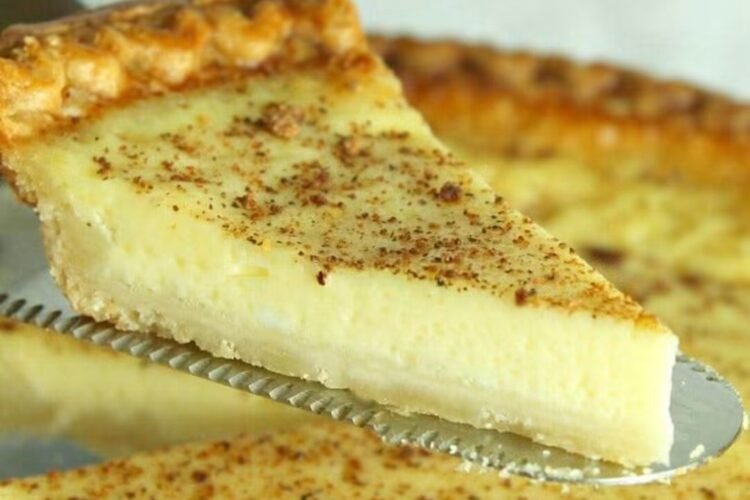
There is something timeless about a homemade custard pie. With its tender, flaky crust and silky-smooth filling, this classic dessert proves that you don’t need complicated ingredients or fancy techniques to create something truly special. This Homemade Egg Custard Pie is simple, comforting, and wonderfully old-fashioned, making it the kind of dessert that can turn an ordinary family dinner into a memorable occasion.
This particular recipe has an impressive history, having taken first place in the Custard Pie Category at the 1999 American Pie Council’s National Pie Championship. That recognition makes sense after the first bite. The filling is delicate and creamy, with just enough sweetness, vanilla, and nutmeg to give it that familiar homemade flavor.
What makes this pie especially appealing is how easy it is to prepare. The custard comes together in minutes, and once it is poured into the crust, the oven does most of the work. Even people who normally say they don’t care for egg custard pie may find themselves reaching for a second slice.
Why You’ll Love This Custard Pie
This recipe is a wonderful choice when you want a classic dessert without spending hours in the kitchen. The ingredient list is short, affordable, and made up of pantry and refrigerator staples.
The finished pie has a smooth, lightly creamy texture with a subtle vanilla flavor and gentle warmth from nutmeg. It isn’t overly sweet, which allows the custard and buttery crust to shine.
Another great feature is its versatility. You can use a homemade pie crust when you have time, or a quality refrigerated or frozen deep-dish crust when you want to keep things quick and convenient.
Ingredients You’ll Need
- 1 unbaked deep-dish pie shell – Homemade or store-bought both work beautifully.
- 3 large eggs – These provide the structure that allows the custard to set.
- 1/2 cup granulated sugar – Adds sweetness without overpowering the delicate custard.
- 1/2 teaspoon salt – Enhances the overall flavor.
- 1/2 teaspoon ground nutmeg – Gives the pie its classic custard-pie character.
- 2 2/3 cups milk – Creates the smooth, creamy base.
- 1 teaspoon pure vanilla extract – Adds a soft layer of vanilla flavor.
For serving, you can also use a little freshly grated nutmeg over the top.
Do You Need to Scald the Milk?
Traditional custard recipes often instruct you to scald the milk before mixing it with the eggs. Scalding simply means heating the milk until it becomes very hot and steamy without bringing it to a boil.
If you choose to scald your milk, place it in a heavy-bottomed saucepan over medium heat. Stir occasionally while it warms. Once you notice steam rising and small bubbles appearing around the edges, remove it from the heat.
Allow the milk to cool slightly before combining it with the eggs so the eggs don’t begin cooking from the heat.
For a simpler modern approach, you can also use the milk without scalding it. Many home cooks find that the recipe works perfectly well this way, especially when all of the ingredients are mixed together before baking.
The Secret to a Good Custard Pie: Par-Bake the Crust
Before adding the custard, it is worth giving your pie crust a little head start.
A par-baked crust, sometimes called a partially baked crust, helps prevent the bottom from becoming soggy once the liquid custard is added.
If you’re using a homemade crust, prepare it according to your preferred recipe and partially bake it before filling. A store-bought deep-dish crust can also be par-baked.
Bake the empty crust for approximately 20 to 25 minutes, following the instructions appropriate for the crust you’re using. Let it cool slightly before adding the custard.
This extra step takes a little time, but it can make a noticeable difference in the final texture.
How to Make Homemade Egg Custard Pie
1. Preheat the Oven
Start by preheating your oven to 350°F (175°C). Having the oven fully heated before the pie goes in helps the custard begin cooking evenly.
2. Prepare the Egg Mixture
Place the three eggs in a large mixing bowl and beat them lightly. You don’t need to whip them until they’re fluffy; just break up the yolks and whites so they can combine easily.
Add the sugar, salt, nutmeg, milk, and vanilla extract.
Beat the mixture until everything is well combined and the sugar has begun dissolving. A hand mixer works well, but a whisk can also do the job.
3. Fill the Pie Crust
Place your par-baked pie shell on a baking sheet. Carefully pour the custard mixture into the crust.
The baking sheet makes it easier to transfer the filled pie to the oven and also provides some protection if the filling happens to bubble over.
4. Bake
Place the pie in the preheated oven and bake for approximately 35 to 40 minutes.
The exact baking time can vary slightly depending on your oven and the depth of your pie crust.
The custard should look set around the edges while the center may still have a very slight jiggle. Try not to overbake it, because an overly cooked custard can become firm or develop a less silky texture.
5. Cool Completely
Remove the pie from the oven and place it on a cooling rack.
Allow it to cool before slicing. As the pie cools, the custard continues to set, making it much easier to cut clean slices.
Once cooled, finish the pie with a light sprinkling of freshly grated nutmeg.
Expert Tips for the Smoothest Custard
Don’t overbeat the eggs. Excessive beating can incorporate too much air into the mixture. A gentle blend is all you need.
Use room-temperature ingredients when possible. Milk and eggs that aren’t extremely cold can combine more evenly.
Watch the baking time. Custard continues setting as it cools, so there is no need to wait until the center looks completely firm in the oven.
Protect the crust if necessary. If your crust begins browning too quickly, loosely cover the edges with aluminum foil during the latter part of baking.
Let it cool before cutting. This is one of the most important steps for achieving neat slices and a properly set filling.
Common Mistakes to Avoid
One common mistake is pouring the custard into a completely raw crust and expecting the bottom to stay perfectly crisp. Par-baking helps significantly with this issue.
Another mistake is overbaking. A custard pie should have a tender, delicate texture rather than a rubbery or excessively firm filling.
Finally, don’t rush the cooling process. Cutting the pie while it is still very hot can cause the custard to appear loose and make the slices difficult to serve.
Easy Variations
Although the original recipe is delicious as written, you can make small changes depending on your preferences.
For a stronger vanilla flavor, add a little extra pure vanilla extract.
For a richer custard, substitute part of the milk with half-and-half.
You can also experiment with the spices. A tiny pinch of cinnamon alongside the nutmeg gives the pie a warmer flavor that’s especially nice during the fall and winter months.
For a citrus twist, add a small amount of finely grated lemon or orange zest to the custard.
How to Serve Custard Pie
This pie is delicious all by itself, but there are plenty of ways to serve it.
For a simple presentation, sprinkle each slice with freshly grated nutmeg.
For something more indulgent, serve it with a spoonful of lightly sweetened whipped cream.
A scoop of vanilla ice cream also makes a wonderful pairing, especially when the pie is slightly chilled.
Because the custard is delicate, this dessert works particularly well after hearty family meals. It is equally suitable for holidays, potlucks, Sunday dinners, and afternoon gatherings.
How to Store It
Because this pie contains eggs and milk, leftovers should be refrigerated.
Allow the pie to cool, then cover it and place it in the refrigerator. Enjoy the leftovers within several days for the best quality.
The pie can be served cold straight from the refrigerator, or you can let individual slices sit at room temperature briefly before serving.
Frequently Asked Questions
Can I use a store-bought pie crust?
Absolutely. A deep-dish refrigerated or frozen pie crust is a convenient option. Just make sure it is suitable for the amount of filling in this recipe.
Why should I par-bake the crust?
Par-baking gives the crust a head start and helps keep the bottom from becoming overly soft after the liquid custard is added.
Does the milk have to be scalded?
Not necessarily. Scalding is a traditional step, but you can prepare the recipe without it. If you do heat the milk, be careful to let it cool somewhat before combining it with the eggs.
How do I know when the pie is done?
The edges should be set, while the center should have a gentle jiggle when the pie is carefully moved. It will continue firming as it cools.
Can I make this pie ahead of time?
Yes. In fact, making it ahead can be convenient because the pie needs time to cool and set before slicing. Store it covered in the refrigerator until you’re ready to serve.
Recipe Card
Classic Homemade Egg Custard Pie
Prep Time: 10 minutes
Par-Bake Time: 20–25 minutes
Cook Time: 35–40 minutes
Total Time: Approximately 1 hour 10 minutes, plus cooling
Servings: 8 slices
Ingredients
- 1 unbaked deep-dish pie shell
- 3 large eggs
- 1/2 cup granulated sugar
- 1/2 teaspoon salt
- 1/2 teaspoon ground nutmeg
- 2 2/3 cups milk
- 1 teaspoon pure vanilla extract
- Freshly grated nutmeg, for topping
Instructions
- Preheat oven to 350°F (175°C).
- Par-bake the pie crust for about 20–25 minutes, according to the crust’s instructions.
- Lightly beat the eggs in a large bowl.
- Add sugar, salt, nutmeg, milk, and vanilla.
- Mix until the ingredients are thoroughly combined.
- Pour the custard into the prepared pie shell.
- Bake for 35–40 minutes, or until the edges are set and the center has a slight jiggle.
- Remove from the oven and allow the pie to cool completely.
- Sprinkle with freshly grated nutmeg.
- Slice and serve.
Final Thoughts
Classic recipes often become classics for a reason, and this Homemade Egg Custard Pie is a perfect example. It uses simple ingredients, requires very little preparation, and delivers the kind of comforting flavor that makes people ask for the recipe after their first bite.
The combination of creamy custard, flaky crust, vanilla, and nutmeg is wonderfully nostalgic without being complicated. Whether you’re an experienced baker or making your first custard pie, this recipe is approachable enough to try with confidence.
Just remember the essentials: par-bake the crust, don’t overbake the custard, and give the pie plenty of time to cool before slicing. Do that, and you’ll have a beautiful old-fashioned dessert that’s likely to disappear much faster than expected.