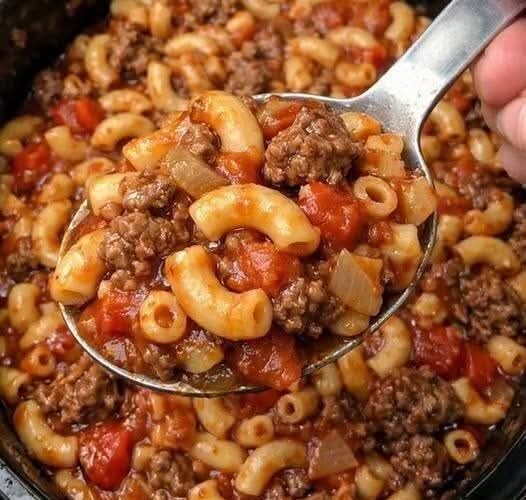
There’s something special about an old-fashioned dinner that doesn’t require expensive ingredients or complicated cooking techniques. Slow Cooker Poor Man’s Goulash is exactly that kind of meal. Made with simple ground beef, tender onions, tomato sauce, and elbow macaroni, this hearty recipe turns basic pantry staples into a satisfying family dinner.
The beauty of this recipe is its simplicity. You don’t need a long list of spices or fancy ingredients to create a meal everyone will enjoy. The beef and onions provide a savory base, while tomato sauce gives the dish a rich, comforting flavor. Once everything comes together in the slow cooker, the result is a warm, filling meal that tastes like something you’ve been cooking all day.
This budget-friendly goulash is especially useful when you need to feed a hungry family without spending a fortune. It’s perfect for busy weeknights, casual Sunday dinners, potlucks, or those evenings when you simply want a bowl of cozy comfort food.
Why You’ll Love This Slow Cooker Goulash
This recipe checks all the boxes for an easy family meal.
First, it uses inexpensive ingredients that are easy to find. Ground beef, onions, tomato sauce, and macaroni are staples in many kitchens, making this an excellent recipe when you’re trying to stretch your grocery budget.
Second, most of the cooking happens in the slow cooker. After browning the beef and softening the onions, you can let the slow cooker take care of the flavorful base while you work on other things.
Finally, this dish is incredibly filling. The combination of ground beef and pasta makes every serving hearty enough to stand on its own, although a simple side dish can turn it into an even more complete dinner.
Recipe Overview
Prep Time: 15 minutes
Cook Time: 4–5 hours on LOW, plus pasta cooking time
Total Time: About 4½–5½ hours
Servings: 6–8
Cuisine: American comfort food
Course: Main dish
Ingredients
- 2 pounds ground beef, preferably 80–85% lean
- 1 large yellow onion, diced
- 2 cans (15 ounces each) tomato sauce
- 3 cups dry elbow macaroni
- 1 teaspoon kosher salt, or to taste
- ½ teaspoon black pepper, or to taste
- 1½ to 2 cups water, as needed
Choosing the Best Ingredients
For the beef, an 80–85% lean ground beef works particularly well because it has enough fat to add flavor without making the finished dish excessively greasy. If your beef produces a lot of fat during browning, simply drain most of it before transferring the mixture to the slow cooker.
Fresh yellow onion adds sweetness and savory flavor as it cooks. Dice it fairly small so it softens nicely and blends into the sauce.
Elbow macaroni is the traditional choice here because its small shape cooks quickly and holds onto the tomato sauce. Other small pasta shapes can work, but cooking times may vary.
How to Make Slow Cooker Poor Man’s Goulash
1. Brown the Ground Beef
Begin by heating a large skillet over medium-high heat. Add the ground beef and break it apart with a wooden spoon or spatula.
Cook for about 7–10 minutes, stirring occasionally, until the beef is thoroughly browned and no pink remains. Browning the meat before adding it to the slow cooker is an important step because it develops a deeper, more savory flavor.
If there is a large amount of rendered fat in the skillet, carefully drain most of it. Leaving a small amount behind can help keep the goulash flavorful and moist.
2. Add the Onion
Add the diced yellow onion directly to the browned beef. Continue cooking for approximately 3–5 minutes, stirring occasionally.
You don’t need to completely cook the onions at this stage. Simply let them soften and become slightly translucent around the edges.
This quick skillet step gives the onions a head start and helps build the savory foundation of the dish.
3. Transfer Everything to the Slow Cooker
Scrape the beef and onion mixture into a 5- to 6-quart slow cooker.
If your skillet has browned bits stuck to the bottom, scrape those up as well. Those little caramelized pieces contain plenty of flavor and can make the finished goulash taste richer.
4. Add the Tomato Sauce and Seasonings
Pour both cans of tomato sauce over the beef and onions.
Add the kosher salt and black pepper, if using, then stir everything together until the meat and onions are evenly coated with the tomato sauce.
At this point, the mixture will look fairly thick. Don’t worry about that. Water will be added later when it’s time to cook the macaroni.
5. Let the Goulash Cook Slowly
Place the lid securely on the slow cooker.
Cook on LOW for 4–5 hours or on HIGH for 2–3 hours.
During this time, the onions will become tender and the flavors will blend together. The tomato sauce absorbs some of the savory flavor from the beef, creating a simple but delicious meat sauce.
Try to keep the lid closed as much as possible while the goulash cooks. Every time the lid is removed, heat escapes and the cooking process can take longer.
6. Add the Macaroni
About 30–40 minutes before you want to serve the meal, it’s time to add the pasta.
Stir in 1½ cups of water, then add the dry elbow macaroni.
Mix thoroughly, making sure the pasta is distributed throughout the sauce. Ideally, most of the macaroni should be surrounded by the liquid.
If the mixture looks extremely thick or the pasta isn’t sufficiently covered, add some of the remaining water, up to another ½ cup.
7. Finish Cooking the Pasta
Cover the slow cooker again and cook on HIGH for approximately 20–30 minutes.
Stir the goulash once around the halfway point to prevent the pasta from sticking together and to help it cook evenly.
Start checking the macaroni after about 20 minutes. Slow cookers vary considerably, so your pasta may become tender faster or may need a few extra minutes.
Be careful not to overcook the macaroni. You want it tender but still holding its shape.
8. Taste and Serve
Once the pasta is cooked, give the goulash a good stir.
Taste it and adjust the salt and black pepper if necessary. The finished dish should be thick, saucy, and glossy, with tender pasta, flavorful ground beef, and soft onions throughout.
Serve immediately while it’s hot.
Helpful Tips for the Best Goulash
Brown the beef first. While it adds an extra step, browning gives the meat much more flavor than simply placing raw ground beef directly into the slow cooker.
Don’t add the macaroni too early. Pasta can become overly soft when cooked for several hours. Adding it near the end helps maintain a pleasant texture.
Watch the liquid. The exact amount of water needed can depend on your slow cooker, pasta, and how thick your tomato sauce is. Start with 1½ cups and add more only if necessary.
Stir the pasta once. A quick stir during the final cooking stage helps distribute the macaroni and liquid evenly.
Serve it right away. The pasta will continue absorbing sauce as it sits, so the goulash is best served soon after the macaroni reaches the desired tenderness.
Easy Variations
One of the best things about Poor Man’s Goulash is how easy it is to customize.
For extra flavor, you can add minced garlic along with the onions. A little Italian seasoning, paprika, or dried oregano can also give the tomato sauce a different flavor profile.
If you enjoy vegetables, diced bell peppers, mushrooms, or finely chopped carrots can be added to the beef and onion mixture.
For a cheesy version, stir shredded cheddar cheese into the finished goulash just before serving. Let it melt into the hot pasta for a creamy, cheesy finish.
You can also substitute ground turkey for the beef if you prefer a lighter option, although the flavor will be slightly different.
What to Serve with Poor Man’s Goulash
This goulash is filling enough to serve as a complete meal, but simple sides pair beautifully with it.
Try serving it with warm garlic bread for soaking up the extra tomato sauce. A crisp green salad provides a refreshing contrast to the hearty pasta.
Steamed green beans, broccoli, or mixed vegetables are also excellent choices.
For a casual family dinner, simply serve generous bowls of goulash with warm bread on the side. Sometimes the simplest combination is the most satisfying.
Storage and Reheating
Allow leftover goulash to cool before transferring it to an airtight container. Refrigerate for up to 3–4 days.
When reheating, add a small splash of water before warming it because the macaroni will continue absorbing the sauce as it sits.
You can reheat individual portions in the microwave or warm larger quantities gently in a saucepan on the stovetop.
The texture may become softer after refrigeration, but the flavor remains wonderfully comforting.
Frequently Asked Questions
Can I put uncooked macaroni directly into the slow cooker?
Yes, but it should be added near the end of cooking rather than at the beginning. Adding it during the final 20–30 minutes helps prevent the pasta from becoming mushy.
Can I make this goulash ahead of time?
Absolutely. The beef and tomato base can be prepared ahead, refrigerated, and reheated. For the best pasta texture, however, cooking the macaroni closer to serving time is ideal.
Can I freeze leftover goulash?
You can freeze it, although cooked pasta may become softer after thawing and reheating. Store cooled portions in airtight freezer-safe containers and thaw them in the refrigerator before reheating.
Why is my goulash too thick?
The macaroni naturally absorbs liquid as it cooks and continues absorbing sauce afterward. Add a small amount of water while reheating and stir well until you reach the desired consistency.
Final Thoughts
Slow Cooker Poor Man’s Goulash proves that an affordable meal can still be incredibly comforting and delicious. With ground beef, onions, tomato sauce, and macaroni, you can create a generous family dinner without complicated ingredients or hours spent standing over the stove.
The slow cooker does most of the work, allowing the beef, onions, and tomato sauce to develop a rich homemade flavor before the macaroni is added at the end. Serve it with garlic bread and a simple salad, and you have the kind of old-fashioned dinner that feels warm, familiar, and satisfying.
If you’re looking for an easy budget-friendly slow cooker dinner, this simple goulash deserves a spot in your regular meal rotation.